
You’ve spent hours scrolling through listings, found a few homes you love, and even pictured where the sofa goes. Then comes the reality check: the mortgage pre-approval letter. If that number feels more like a roadblock than a key to your new front door, you’re in exactly the right place. The frustration of seeing a mortgage pre-approval amount that’s too low for the homes in your market is a common and solvable problem.
Contrary to how it might feel, that pre-approval amount isn’t a final verdict written in stone. It’s a starting point calculated by a surprisingly predictable formula. Most homebuyers don’t realize this, but lenders aren’t working from a mysterious black box; they are using a clear playbook. Understanding that playbook is the first step in learning how to get approved for a higher mortgage loan and rewrite that number in your favor.
The entire lending decision essentially balances three key areas of your financial life areas you have more control over than you might think. Lenders focus almost exclusively on your documented income, your existing monthly debt obligations, and your credit history. These three pillars form the foundation of your borrowing power and are the levers you can pull to change the outcome.
This guide provides simple, step-by-step strategies that can significantly boost your home buying power. By focusing on the same variables your lender does, you can take control of the process and work toward turning that disappointing pre-approval into a competitive offer.
What Is a Debt to Income Ratio, and Why Does It Control Your Loan Size?
If there’s one number that has the most control over the size of the loan you can get, this is it. While your credit score shows lenders if you’re likely to pay them back, your Debt to Income ratio (DTI) tells them how much you can realistically afford to pay back each month. It’s the single most powerful lever you can pull to increase your borrowing power.
At its core, DTI is simple math. Lenders calculate it by taking your total monthly debt payments (like car loans, student loans, and minimum credit card payments) and dividing that by your Gross Monthly Income your total earnings before any taxes or deductions are taken out. The result is a percentage that shows how much of your income is already spoken for.
Think of your monthly income as a full gas tank. Every existing debt payment siphons a little fuel out. The lender needs to see that there’s more than enough fuel left in the tank to handle a mortgage payment, property taxes, and home insurance. This is why a small, nagging credit card balance can have such an outsized impact on your loan amount; its monthly payment directly reduces the space available for your future home payment.
So, what’s the magic number? While it varies, many lenders use 43% as a general ceiling for your total DTI, including your estimated new mortgage. If your existing debts already take up 20% of your income, you only have about 23% left for a home loan in their eyes. Getting that DTI number down is the fastest way to get your loan approval amount up.
A 5-Minute Guide to Calculating Your Own DTI
Ready to run the numbers? This quick DTI calculation is one of the most powerful steps you can take to understand your borrowing capacity. First, let’s tally up the monthly debt payments that lenders actually look at. Grab a pen and paper or open a spreadsheet, and add up the minimum monthly payments for the following:
- Debts to Include: Car loans, student loans, personal loans, credit card minimums, and any court ordered payments like alimony or child support.
- What NOT to Include: Your day to day living expenses are ignored in this specific formula. Lenders don’t factor in your rent, utilities, cell phone bills, insurance premiums, or grocery budget.
Next, find your gross monthly income that’s your total pay before taxes. If you’re salaried, just divide your annual salary by 12. If you’re paid hourly, a good estimate is: (Hourly Rate × Hours Worked Per Week × 52) ÷ 12. Now, simply divide your total monthly debt payments by your gross monthly income. For example, $1,000 in debt payments on a $6,000 income gives you a DTI of 16.7% ($1,000 ÷ $6,000).
This percentage is your baseline the starting point for improvement. Knowing this number transforms the loan approval process from a mystery into a math problem you can solve. While a low DTI shows lenders you can afford the payment, your credit score is what proves you’re a trustworthy borrower in the first place. This is another of the core factors lenders use for mortgage approval, and it influences more than just your interest rate.
Why a Good Credit Score Is More Than Just a Lower Interest Rate
While a low DTI shows lenders you can handle a payment, your credit score is what proves you’re a trustworthy borrower. You might think the DTI limits are set in stone, but lenders often have their own specific rules and can be more flexible for applicants they see as low risk. A stellar credit score especially one above 740 is your golden ticket. It signals to the lender that you have a long history of financial responsibility, which may convince them to approve you for a larger loan, even if your DTI is a bit higher than the standard guideline.
Beyond creating trust, a strong credit score directly tackles a major cost: Private Mortgage Insurance (PMI). If your down payment is less than 20%, lenders require PMI, which is an insurance policy that protects them, but that you have to pay for. This fee can add hundreds to your monthly payment. A higher credit score dramatically reduces this PMI cost. By shrinking that PMI payment, you free up more of your monthly budget, which can then be used to support a bigger mortgage. Less money spent on fees means more money available for your home.
Lenders see scores in tiers, and your goal is to climb as high as you can. A score above 740 is generally considered “excellent,” unlocking the best rates and the most flexibility. Scores in the 670 to 739 range are still “good,” but may come with slightly higher costs. The higher your score, the more powerfully you can make the case that you can handle a larger loan. One of the fastest ways to improve both your score and your DTI is by strategically tackling your existing debts.
Action Plan Part 1: How to Pay Down Debt for Maximum Mortgage Impact
When you decide to get serious about paying down debt, the common advice is to attack the account with the highest interest rate. While that’s a great way to save money over time, it’s not the best strategy when your goal is to get approved for a bigger mortgage. Lenders aren’t concerned with your interest rates; they are laser-focused on your total monthly debt payments. To increase your mortgage borrowing capacity, your primary mission is to lower this monthly figure as much as possible.
Consider this scenario: you have a $4,000 personal loan with a $300 monthly payment and a $10,000 credit card balance with a $200 minimum payment. To a mortgage lender, the personal loan is a bigger problem for your application. Wiping out that $4,000 loan frees up $300 in your monthly budget instantly. This single move has a far greater effect on your debt-to-income ratio (DTI) than making a $4,000 payment on the credit card, which might only reduce your minimum payment slightly.
To effectively improve your DTI for a larger home loan, you need to be strategic. Instead of focusing on interest rates or total balances, prioritize debts that give you the biggest “payment to balance” knockout punch. Here is the order to follow for maximum impact:
- Small Installment Loans: Pay off that personal, furniture, or nearly paid off car loan first. These loans often carry high monthly payments relative to their small remaining balance, making them the most powerful targets for DTI reduction.
- Loans Nearing Payoff: If an installment loan has 10 or fewer payments remaining, some lenders will ignore it completely. Paying it off early removes all doubt and guarantees it won’t count against you.
- Credit Cards (by Payment): Once installment loans are handled, rank your credit cards by their minimum monthly payment, and start with the highest one.
By systematically eliminating entire monthly payments from your budget, you directly lower your DTI and prove to the lender that you can comfortably handle a larger mortgage. But shrinking your debts is only half of the equation. Once you’ve trimmed your monthly obligations, the next step is to get credit for every single dollar you earn.
Action Plan Part 2: Getting Credit for Every Dollar You Earn
Boosting your income on paper isn’t about getting a last-minute raise; it’s about meticulously proving to lenders that your earnings are stable and predictable. If you receive a regular paycheck from an employer, this part is relatively simple. Your recent pay stubs and W-2 forms create a clear, documented history that lenders can easily verify. For a mortgage underwriter, this kind of consistent income is the gold standard and forms the solid foundation of your mortgage application.
However, if your income isn’t the same every month think freelancing, sales commissions, or overtime you need to play by a different set of rules. Lenders get nervous about income that fluctuates, so they rely on the crucial two-year history rule to feel confident. They will ask for two full years of tax returns to see a proven track record. From there, they typically perform income averaging, calculating a dependable monthly figure based on your earnings over the last 24 months. This is great news if you’ve had a side hustle for a few years, but it means you must have the tax documents to back it up.
This focus on provable history is also why some money, unfortunately, can’t help your application. A business you just started three months ago or cash income that wasn’t reported on your taxes is essentially invisible to a lender. For established self-employed borrowers, providing a current Profit & Loss statement (P&L) a simple summary of your business’s recent income and expenses can be a powerful tool to show that your earnings are still strong this year. Getting every dollar of your hard-earned, provable income counted is a critical step, but it’s not the final one. Once your income and debt are optimized, the next powerful lever is the cash you bring to the table.
The Down Payment Dilemma: How More Cash Upfront Boosts Your Loan
Beyond income and debt, the amount of cash you bring to the table is your next superpower for increasing your borrowing power. Lenders measure this with a simple concept called the Loan to Value (LTV) ratio. This is just a percentage that shows how much of the home’s price you’re asking them to finance. For example, if you make a $40,000 down payment on a $400,000 home, your loan is $360,000, or 90% of the value. A lower LTV shows you have more personal investment or “skin in the game” which makes you a much less risky and more attractive borrower.
Hitting the 20% down payment mark is especially critical if your initial mortgage pre-approval amount is too low. When your down payment is less than 20%, lenders require you to pay for Private Mortgage Insurance (PMI). This is an extra monthly fee, often hundreds of dollars, that protects the lender, not you. By pushing your down payment to 20% (an 80% LTV), you eliminate PMI entirely. That money is now freed up in your monthly budget, allowing you to qualify for a significantly larger loan payment and a more expensive home.
A larger down payment makes your entire application stronger. It directly reduces the lender’s risk, which can not only erase your PMI payment but may also help you secure a better interest rate, saving you thousands over the life of the loan. But what if your savings account isn’t quite there? For many buyers, the path to a larger down payment comes from a source they hadn’t considered.
Unlocking More Buying Power: How to Use Gift Funds Correctly
That “other source” for a bigger down payment is often the people who care about you most: your family. Many lenders allow you to use money from a relative as part of your down payment, which can be a game changer. However, there’s one rule that is absolutely non negotiable: the money must be a true gift, not a loan in disguise. From a lender’s perspective, a secret loan is an undeclared debt that could impact your ability to pay your mortgage. Properly using gift funds for your down payment means proving that you have no obligation to pay the money back, which strengthens your application.
To satisfy the lender, the person giving you the money must sign a formal Gift Letter. Think of this as a simple, one-page document that acts as your proof. It clearly states the donor’s name and relationship to you, the exact dollar amount, and includes a crucial sentence declaring that the money is a gift with no expectation of repayment. This letter officially tells the lender that your increased down payment doesn’t come with a hidden monthly payment, which is one of the key factors lenders use for mortgage approval. Without this letter, the funds are unusable.
Just as important as the letter is the money’s journey into your bank account. The mortgage underwriting process is all about creating a clear paper trail. You cannot deposit a large sum of cash; lenders need to “source” the funds. The correct process involves the gift-giver transferring the money directly from their account to yours. You will then need to provide bank statements from both the giver (showing the money leaving their account) and yourself (showing it arriving). This clean, documented transfer proves the money’s origin and prevents major delays. But if a gift isn’t on the table, there’s still another powerful way to boost your borrowing ability.
The Co-Borrower Question: Can a Partner Double Your Buying Power?
If your income alone isn’t enough to get the loan you want, you might wonder: can I get a bigger mortgage with a co-borrower? The answer is often yes. Adding a second person like a spouse, partner, or even a relative to your mortgage application means the lender can consider their income right alongside yours. This combined financial strength is a direct way to increase mortgage borrowing capacity, as it reassures the lender that more money is available to handle the monthly payments.
However, a lender looks at the whole picture, not just the paycheck. When you add a co-borrower, you also add their entire debt load. Their car payments, student loans, and credit card balances are all added to your side of the debt to income (DTI) equation. If your potential co-borrower has a lot of debt or a weaker credit score, they could actually hurt your chances or lower your approved amount. The bank will typically use the lower of the two credit scores, so it’s a strategy that requires careful consideration.
Beyond the numbers, it’s crucial to understand the legal commitment. When you co-borrow, you are both considered 100% responsible for 100% of the loan. This is called “joint and several liability.” It means if one person stops paying for any reason, the lender will expect the other person to cover the entire monthly payment. It’s a full financial partnership that lasts for the life of the loan. Whether you apply solo or with a partner, the lender’s decision will heavily rely on your credit history. Fortunately, there are ways to polish your credit report quickly.
3 Credit Score Hacks You Can Do This Month
Your credit score is the first thing a lender checks, and improving it is often the best way to increase loan pre-qualification amount. Start by playing detective on your own credit history. You are entitled to a free credit report from each of the three major bureaus (Equifax, Experian, and TransUnion) every year at AnnualCreditReport.com. Comb through them carefully. If you spot an error like a debt that isn’t yours or a payment marked late that was on time you have the right to file a dispute to get it corrected. Removing even one negative error can provide a significant lift.
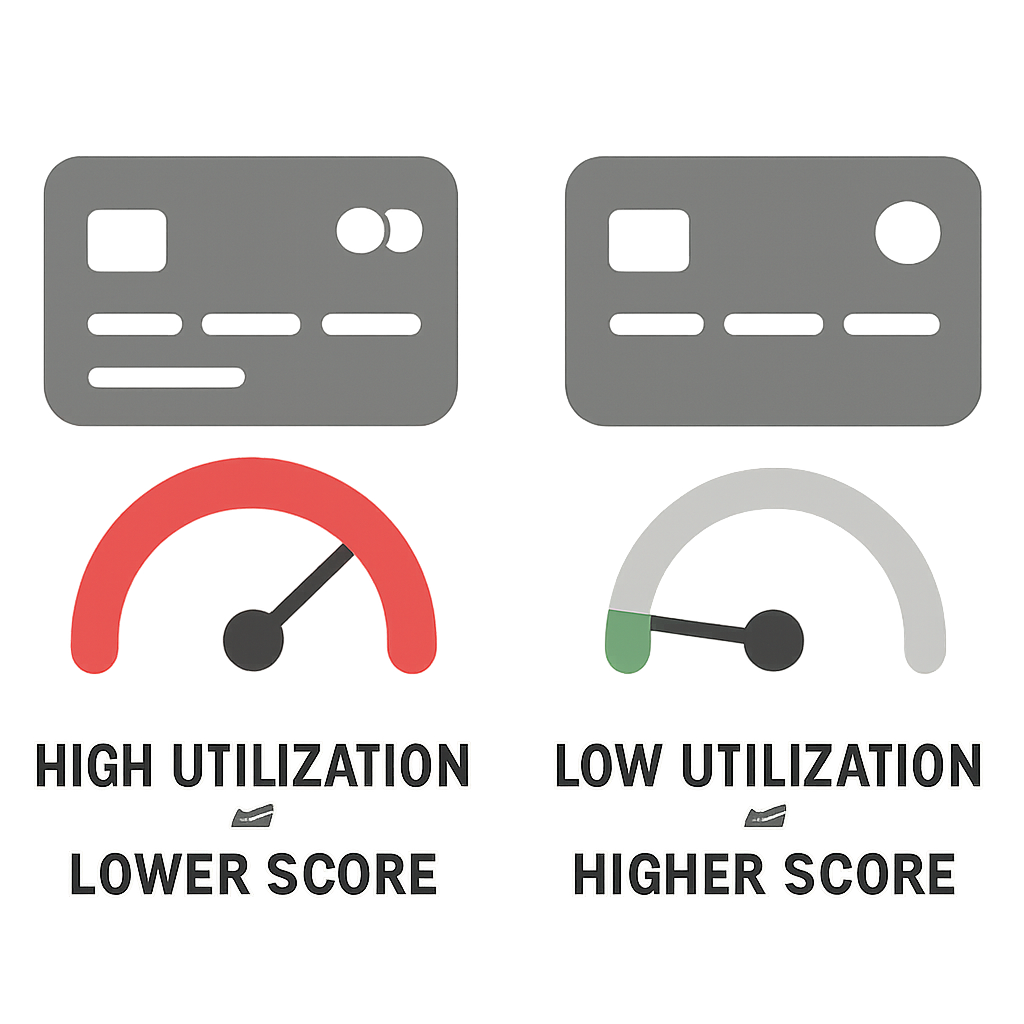
Next, focus on the single fastest way to boost your score: lowering your credit utilization ratio, which is the percentage of your available credit that you’re currently using. Lenders get nervous when they see cards maxed out. Imagine a balance meter on your credit card; a meter that’s 90% full looks risky, while one that’s 10% full signals strong financial control. Paying down high-balance credit cards to get them below 30% utilization (and ideally below 10%) is one of the most powerful ways to boost home buying power in a matter of weeks.
While you’re cleaning up your existing credit, it’s critical to avoid opening any new lines of credit. It can be tempting to finance a new furniture set for the home you hope to buy or open a store card for a quick discount, but this is a major misstep. Each new application creates a “hard inquiry” on your report and can signal to a mortgage lender that you’re taking on more financial risk right before asking them for their biggest loan. The rule is simple: from now until you close on your home, put a freeze on all new credit.
Taking these steps demonstrates financial responsibility and can directly improve the credit score needed for a large mortgage. A healthier credit profile reassures lenders that you can manage debt wisely, paving the way for a higher loan approval. But what happens when the house you want is in a market so expensive that it pushes past conventional loan limits? That’s when you enter the world of “jumbo” loans.
When Your Dream Home Requires a “Jumbo” Loan
Sometimes, even with a great credit score, the price tag on your dream home is just too high for a standard mortgage. That’s because most loans, called conforming loans, must fit under a maximum size limit set by federal regulators. These limits vary by county to account for local housing costs. If the loan you need exceeds this cap, you’re officially in jumbo territory. A jumbo loan is simply any mortgage that’s too large to be a conforming loan, a common situation when your mortgage pre-approval amount is too low for your target neighborhood.
Stepping into the jumbo category isn’t just a matter of asking for more money; it’s like moving up to a different league with tougher rules. Because these loans are larger, lenders see them as a bigger risk and have stricter jumbo loan vs conforming loan requirements. You’ll likely need a higher credit score, a larger down payment (often 20% or more), and something called cash reserves which means having several months of mortgage payments sitting in your bank account after you’ve paid all your closing costs.
This creates a strategic choice for many buyers. If a home’s price pushes your needed loan amount just slightly over the conforming limit in your area, it can be smarter to increase your down payment. By pushing the loan amount back under that jumbo threshold, you can avoid the tougher requirements and access the more flexible terms of a conforming loan. Of course, the size of your loan isn’t the only number that matters; lenders also look closely at the “hidden” monthly costs that reduce your loan amount.
The “Hidden” Monthly Costs That Reduce Your Loan Amount
It’s easy to focus on a home’s price tag, but lenders are actually looking at something else: the total monthly payment you can afford. This isn’t just your loan repayment; it’s a bundle of four costs known as PITI: Principal, Interest, Taxes, and homeowner’s Insurance. From a lender’s perspective, this complete payment is the true cost of owning the home, and it’s what they measure against your income as part of the mortgage underwriting process.
This is where two seemingly identical homes can result in very different loan approvals. Imagine House A has property taxes of $300 a month, while House B, in a different town, has taxes of $600. Even if they have the same sale price, the PITI for House B is $300 higher. If your lender approved you for a total monthly payment of $3,000, that extra tax bill for House B means your loan amount must be significantly smaller to keep the total payment under your limit. The same is true for condos with high HOA fees, which are added right on top.
Before you get too attached to a property or a neighborhood, investigate the estimated property taxes and any applicable HOA fees. Knowing these “hidden” costs upfront helps you target homes that fit within your lender’s approved total monthly payment, saving you from the disappointment of discovering your dream home is actually outside your real budget.
Your 90-Day Plan to a Higher Mortgage Approval
You now know that a lender’s decision isn’t a mystery it’s a formula based on your income, debt, and credit. More importantly, you know exactly which of those numbers you have the power to change. By understanding the process, you are ready to actively shape your mortgage pre-approval amount.
Turning that knowledge into a bigger loan amount starts with a clear plan. Instead of feeling overwhelmed, follow this step-by-step guide to maximizing your mortgage qualification.
Your 90-Day Action Plan
- First 30 Days: The Foundation
- Calculate Your DTI: Use an online calculator to find your current Debt-to-Income ratio. This is your starting line.
- Check Your Credit: Pull your free credit reports and immediately dispute any errors you find.
- Pay Down Plastic: Focus on getting all credit card balances below 30% of their limit. This can give your credit score a quick and significant boost.
- Next 60 Days: The Big Moves
- Eliminate a Payment: If possible, strategically pay off a small installment loan (like a personal or furniture loan) to completely remove its monthly payment from your DTI calculation.
- Gather Your Documents: Collect your last two months of pay stubs, two years of W-2s, and federal tax returns. Being prepared makes the process smoother.
- Finalize Gift Funds: If you’re receiving help with a down payment, get the proper gift letters signed and the funds secured.
- 90 Days & Beyond: The Final Polish
- Maintain Perfection: Make every single payment on time, every time.
- Freeze Your Finances: Avoid applying for new credit or making any large purchases until after you close on your home.
- Reconnect with Your Lender: With these steps completed, you’re ready to ask for an updated pre-approval and see how your hard work has paid off.
The best way to get approved for a higher mortgage loan isn’t about luck; it’s about taking deliberate, informed steps. Each box you check on this list isn’t just a small financial task it’s an act of taking control and becoming the architect of your own homebuying power.